
Trading volumes for the equities cash segment remained soft, even as the benchmark indices rallied nearly 9 per cent in July. Meanwhile, volumes in the futures and options (F&O) market dipped marginally, but continued to hover at record levels. In July, the average daily turnover (ADTV) for the cash segment was Rs 46,602 crore, up 4.5 per cent month-on-month (MoM), but 26 per cent lower than the preceding 12-month average.

The rupee has depreciated 2.35 per cent in the past three months and one per cent in the past month, despite strong capital flows and falling oil prices.

The rupee has given the economy a roller coaster ride for nearly two years now, relegating the stability of 2006 to a distant dream.

India's GDP may turn positive at 1.3 per cent in the third quarter of 2020-21, having witnessed contraction in the previous two quarters due to the coronavirus pandemic, as the number of cases is falling and public spending has started rising, according to a report. The government will release the GDP numbers for the October-December quarter of the current fiscal on Friday. Projecting that the gross domestic product (GDP) may have returned to the black in the last quarter of the calendar year 2020, DBS Bank in the report said the full-year growth in real terms may be at a negative 6.8 per cent.

After a turnaround in performance by Indian equity markets since July that has seen the S&P BSE Sensex and the Nifty50 wipe out the year-to-date losses, analysts suggest investors start nibbling into stocks that are focused on the domestic economy. While they say intermittent corrections, led by policies of global central banks and other economic data, cannot be ruled out, analysts expect India's relative outperformance among global equity markets to continue as it looks better placed with a healthy economic recovery, and remains one of the fastest growing major economies. In this backdrop, Neeraj Chadawar, head of quantitative equity strategy at Axis Securities, believes that amid global slowdown, aggressive tightening by the central banks, and preference for domestic interests first (by the local government), export-oriented themes are likely to be muted or will deliver conservative returns in the near-term.

'India seems to be on a relatively better wicket compared to other emerging markets.'

The real benefits can be seen when prices stabilise, preferably at levels acceptable to both consumers and producers.

Investors may take a 5 to 10 per cent exposure to silver. 'Have a long-term investment horizon when investing in silver ETFs to ride out short-term market fluctuations.'

The company, which sells every second car in the domestic market, said it expected production and sales to grow between 4 per cent and 8 per cent for the financial year started in April.
Prime Minister Manmohan Singh said that rising food prices would make inflation control a more difficult task and it has the potential to derail economic reforms. "We in India too are deeply concerned about rising global commodity and food prices. . . a steep rise in food price will make inflation control more difficult and can thereby hurt the cause of macroeconomic stability. The constituency for economic reforms, so necessary for growth, would also diminish," the PM said.

Higher prices are burdening household budgets and threatening the margins of leading manufacturers.

The new Samvat 2080 is viewed as a year of hope for industrial and precious metals. A key reason is the expectation of US interest rates peaking, followed by a reduction in the coming months. Regarding crude oil, its trajectory depends more on how the situation unfolds in West Asia.

Food inflation, according to the data released earlier in the day, further rose to 19.95 per cent for the week ended December 5.

'Earning expectations remain strong.'
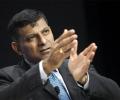
Former RBI governor Raghuram Rajan on Monday said the central bank will have to raise interest rates to tame inflation and the hikes need not be considered by politicians and bureaucrats as some "anti-national" activity. Known for his frank views, Rajan also said it was important to remember that the "war against inflation" is never over. "Inflation is up in India. At some point, the RBI will have to raise rates, like the rest of the world is doing," he said in a LinkedIn post.

This flight of capital began in early August due to risk-aversion created first by rising geopolitical tensions due to North Korean aggression and second by the US Fed's decision to shrink its balance sheet
Terming the government's move to hike petrol prices as "callous", the CPI(M) on Friday demanded immediate roll back of the hike and restoration of the administrative regulation of petrol pricing.

There are already some signs of stress in this market.
According to traders, tur prices have jumped by about 20 per cent during the last fortnight.
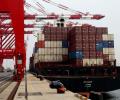
On the back of rising crude oil purchases, India's bill for imports from sanctions-hit Russia jumped 3.5 times in a year in April to $2.3 billion, showed data from the commerce ministry. In April, India's crude oil imports from Russia were valued at $1.3 billion, 57 per cent of India's total inbound shipments from Russia. Other major imported items during the month included coal, soybean and sunflower oil, fertilisers, and non-industrial diamonds. That month, Russia was also the fourth-largest crude petroleum supplier to India, after Iraq, Saudi Arabia, and the United Arab Emirates (UAE).

Non-basmati white rice accounts for nearly 25-30 per cent of total rice exported from the country.

Government-controlled oil-marketing companies (OMCs) have held back petrol and diesel price revisions for a week and are expected to continue doing so, ostensibly owing to political reasons. It appears that the Centre has informally conveyed to the three major OMCs to not revise fuel prices for the time being, two people in the government said. This informal directive follows the talks between the Centre and states on cutting taxes and bringing the auto fuels under the good service tax regime not fetching the desired results, so far.
In a research note, Standard Chartered Bank said continuing concerns over exportable surpluses should keep rice prices above $20 per quintal for most of the year. Among the concerns are export restrictions that could potentially increase inflationary pressures in importing countries that have few substitutes for rice. When the new crop arrives from Thailand it will exert downward pressure on prices.

India Inc's quarterly net profit reached a record high of Rs 1.64 trillion in the third quarter ended December 31, 2020, mainly due to gains from higher commodity prices and a big swing in banks' earnings. The combined net profit of 3,323 listed companies that have declared results so far was up 68.6 per cent year-on-year (YoY). In comparison, earnings were up six times (534 per cent) in the second quarter and 6.5 per cent in the corresponding period last year.

The issues listed by Gandhi include Centre-state relations, rise in cases of communal tension, border transgressions by China and the demand for a joint parliamentary committee (JPC) to investigate the transactions of the Adani business group in light of several revelations.

Indian economy is poised to do better on the back of reforms undertaken by the government and is expected to clock a 6.5-7 per cent growth in the remaining part of the decade, Chief Economic Advisor (CEA) V Anantha Nageswaran said on Tuesday. Addressing reporters here after the tabling of the Economic Survey in Parliament by Finance Minister Nirmala Sitharaman, Nageswaran said that by and large, inflation is likely to be "well behaved" in FY2023-24 barring headwinds. "My optimism is that in the coming decade, rest of the decade, the potential GDP growth, without taking into account export potential, because global economy is still rife with uncertainty, the growth rate would be around 6.5 to 7 per cent, rather than between 6 per cent and 6.5 per cent," he said.

Two-wheeler firms' profits to slow down following a double-digit decline in sales.
Inflation rose for the ninth consecutive week to touch 39-week high of 6.21 per cent for the week ended January 10 with primary articles, including food products, and manufactured products becoming costlier.

The Congress on Saturday resolved to make the Indian National Developmental Inclusive Alliance (INDIA) an 'ideological and electoral success' to free the country from 'divisive politics' and ensure that people get a government that is sensitive and accountable.
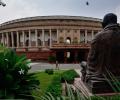
Watch all the action from both House of the Parliament.

Maruti's results and the investor response indicate that quite a few stocks in the auto sector could be on the verge of a big bounce, says Devangshu Datta.
"The prime minister should either bring down prices or leave his chair," Yadav told reporters.

Maruti Suzuki India (MSI) on Wednesday reported over two-fold jump in its consolidated net profit to Rs 1,036 crore for the first quarter ended June 30, mainly due to a low base in the year-ago period. The auto major had posted a net profit of Rs 475 crore in the COVID-hit April-June quarter of the last fiscal. Its net sales rose to Rs 26,512 crore in the June quarter compared to Rs 17,776 crore in the same period of 2021-22.

'The private sector will look to the budget to check whether there are any headwinds or tailwinds.'

'We are engaging in substantial open market sales of both wheat and rice to control food inflation; special measures of market intervention in vegetables, pulses and oil seeds were also taken to cushion the impact.'
Economic recovery from the pandemic in the US has helped India achieve the $400-billion mark for exports for the first time in any fiscal year. According to the preliminary data compiled by the Department of Commerce, India exported goods worth $73 billion to the US from April 1 to March 21 - up 47 per cent, compared to last year. The US' share of exports, compared to total exports, stood at 18.2 per cent. The country is also India's largest trading partner and export destination.
Angry over the 'steep hike' in fuel prices, the United Progressive Alliance's Left allieson Wednesday demanded a review of the decision as it announced a week-long nationwide agitation to protest the "unjustified burden" imposed on the common man.

The second wave of COVID-19 may have a more lasting damage on the Indian economy and exports will once again be the foundation for recovery, Moody's Analytics said on Monday. In its report titled 'APAC Economic Outlook: The Delta Roadblock', Moody's Analytics said social distancing is weighing on the current quarter, but economic recovery will resume by the year-end. The Delta variant of COVID-19 is among factors now adversely affecting economies of the Asia-Pacific (APAC) region, but the economic hit from the current round of movement restrictions in the region will not be as severe as the recessions in the second quarter of last year.
Inflation rate breached the 5.0 per cent mark during the week ended November 1, after a short span of 14 days, as food articles, fuel, and manufactured products became costly.
With economic activity still to reach pre-pandemic levels, the RBI may slow down the pace of rate hikes until next year to quell soaring inflation while supporting growth, the Asian Development Bank (ADB) says in its latest report. The Manila-based multilateral funding agency has raised the inflation forecast for the current fiscal year ending in March 2023 to 6.7 per cent from its earlier projection of 5.8 per cent. For the next fiscal year too, the forecast has been revised upwards to 5.8 per cent from 5 per cent earlier.
